
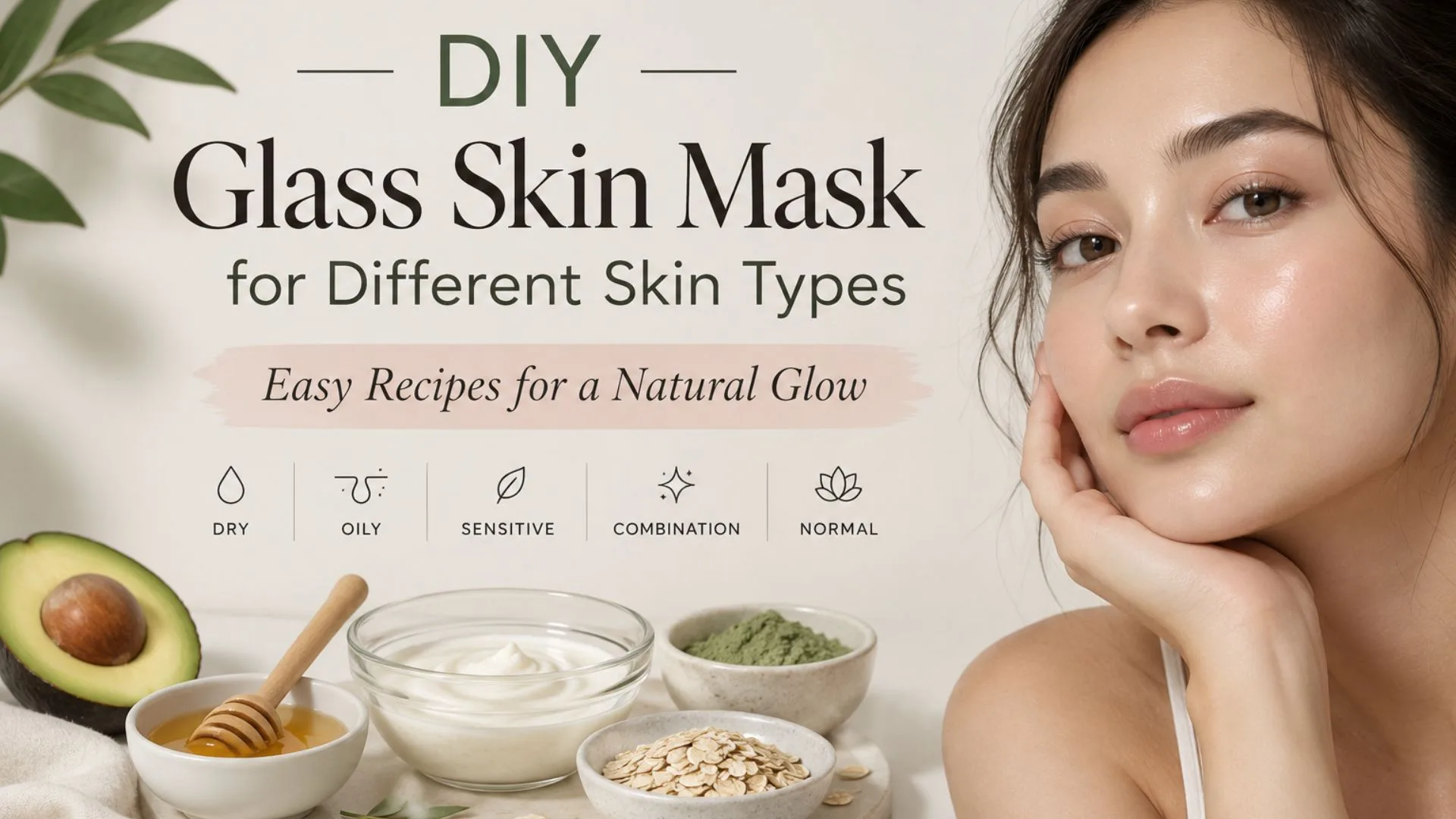
Beautiful skin does not always begin with a shelf full of luxury serums. Sometimes, it starts with understanding what your skin is asking for. Dryness, excess oil, sensitivity, and breakouts can completely shift the way your complexion looks and feels, making even the most carefully curated skincare routine feel less than effortless.
That is where the understated appeal of a DIY face mask comes in. Familiar ingredients from the kitchen can become surprisingly elegant additions to a self-care ritual, offering a simple way to refresh, soften, and hydrate the skin. The secret is not in following every viral recipe—it is in choosing ingredients that complement your skin type and its individual needs.
Discover DIY glass skin masks for dry, oily, sensitive, combination, normal, and acne-prone skin with simple recipes for a hydrated, radiant glow.
What Is Glass Skin?
Glass skin is less about literal perfection and more about the art of creating a complexion that looks deeply hydrated, smooth, luminous, and effortlessly fresh. Inspired by the polished aesthetic of Korean beauty, the trend describes skin with a soft, translucent-looking radiance—almost as though light is naturally reflecting from within.
How to Choose a DIY Glass Skin Mask for Your Skin Type
Before mixing ingredients, identify what your skin actually needs.
- Dry skin generally benefits from richer moisturizing and hydrating ingredients.
- Oily skin often prefers lightweight, soothing ingredients without excessive oils.
- Combination skin can benefit from balancing hydration without making the oilier areas feel heavy.
- Sensitive skin needs an especially gentle approach with minimal ingredients.
- Acne-prone skin should avoid harsh or highly fragranced DIY combinations that can cause irritation.
- Normal skin has more flexibility, but gentle hydration remains a beautiful foundation.
DIY Glass Skin Mask for Dry Skin
Dry skin often needs one thing above all: hydration. For a soft, dewy finish, try a simple oatmeal and honey mask.
Ingredients You’ll Need
- Finely ground oats: 1 tablespoon
- Honey: 1 teaspoon
- Plain yogurt: 1 tablespoon
- Water: A few drops if needed for consistency
How to Make It
Mix the finely ground oats, honey, and plain yogurt in a clean bowl. Stir until you have a smooth, creamy consistency. If the mixture feels too thick, add a few drops of water.
How to Apply
Apply a thin layer to clean skin, avoiding the eye area. Leave it on for 10–15 minutes, then rinse gently with lukewarm water. Must apply moisturizer after wash.
Benefits
Oats can provide a soothing feel, while honey acts as a moisturizer and yogurt adds a creamy, hydrating texture to the mask. For dry skin, the goal is not aggressive exfoliation. It is comfort, moisture, and softness.
Pro tip: Apply your moisturizer while your skin is still slightly damp to help lock in hydration.
DIY Glass Skin Mask for Oily Skin
Oily skin can still become dehydrated. In fact, using overly harsh products to remove oil can sometimes leave the complexion feeling uncomfortable. For oily skin, try a lightweight aloe vera and oat mask.
Ingredients You’ll Need
- Pure aloe vera gel: 1 tablespoon
- Finely ground oats: 1 teaspoon
- Plain water: A few drops if needed
How to Make It
Combine the aloe vera gel and finely ground oats. Mix until the texture is smooth and easy to spread.
How to Apply
Apply a thin layer to clean skin and leave it on for 10 minutes. Rinse gently without scrubbing. Finish with a lightweight, non-comedogenic moisturizer.
Benefits
Aloe vera gives the mask a lightweight, refreshing feel, while oats can help soothe the complexion. The objective for oily skin is hydration without unnecessary heaviness.
Pro tip: Avoid adding coconut oil or other heavy oils simply because a recipe promises “extra glow.” More oil does not automatically mean more glass skin.
DIY Glass Skin Mask for Combination Skin
Combination skin can be tricky because different areas of your face may have different needs. Instead of treating the entire face exactly the same, consider a balanced yogurt and oat mask.
Ingredients You’ll Need
- Plain unsweetened yogurt: 1 tablespoon
- Finely ground oats: 1 teaspoon
- Aloe vera gel: 1 teaspoon
How to Make It
Mix all three ingredients until smooth.
How to Apply
Apply a thin layer across the face. If your T-zone becomes particularly oily, use a lighter layer there and slightly more on drier areas.
Leave the mask on for approximately 10 minutes, then rinse gently.
Benefits
The combination gives your skin a simple blend of hydrating and soothing ingredients without relying on a heavy oil-based formula.
Pro tip: Combination skin often responds well to multi-masking, where you use different formulas on different areas rather than forcing one product to do everything.
DIY Glass Skin Mask for Sensitive Skin
Sensitive skin deserves a minimalist approach. The goal is not to create the most complicated DIY recipe. It is to choose fewer ingredients and minimize potential irritation. A simple oat mask is one of the gentler options.
Ingredients You’ll Need
- Finely ground colloidal oatmeal: 1 tablespoon
- Lukewarm water: Enough to create a soft paste
How to Make It
Add the water gradually to the oatmeal and mix until you have a smooth paste.
How to Apply
Apply gently without rubbing. Leave it on for approximately 5–10 minutes, then rinse with lukewarm water. Pat your face dry and apply a fragrance-free moisturizer.
Benefits
Oatmeal is widely used in skincare for its soothing properties and can be a useful ingredient for a minimalist DIY routine.
Pro tip: Always patch-test a DIY mask before applying it to your entire face, especially if your skin is reactive. For sensitive skin, skip ingredients such as lemon juice, baking soda, undiluted essential oils, and rough scrubs.
DIY Glass Skin Mask for Acne-Prone Skin
When you have acne-prone skin, chasing instant glow can sometimes lead to over-exfoliation. Instead, keep your mask simple and gentle. Try an aloe vera and oatmeal combination.
Ingredients You’ll Need
- Pure aloe vera gel: 1 tablespoon
- Finely ground oatmeal: 1 teaspoon
How to Make It
Mix the ingredients until you get a smooth gel-like paste.
How to Apply
Apply gently to clean skin. Avoid rubbing or massaging the mask into active breakouts. Leave it on for 5–10 minutes, then rinse. Follow with your usual lightweight moisturizer.
Benefits
The focus here is soothing hydration, not aggressively drying out blemishes. Remember that a DIY mask is not an acne treatment. Persistent or painful acne is better addressed with evidence-based skincare and, when needed, professional dermatological advice.
Pro tip: Never pick at breakouts before applying a mask. Broken or irritated skin can be more vulnerable to further irritation.
DIY Glass Skin Mask for Normal Skin
Normal skin gives you a little more flexibility, so you can focus on maintaining hydration and luminosity. Try a simple honey and yogurt glow mask.
Ingredients You’ll Need
- Plain unsweetened yogurt: 1 tablespoon
- Honey: 1 teaspoon
How to Make It
Combine the ingredients until smooth.
How to Apply
Apply a thin layer to clean skin and leave it on for 10 minutes. Rinse thoroughly and follow with moisturizer.
Benefits
This simple combination creates a creamy mask focused on hydration and softness, making it a lovely occasional addition to a normal-skin routine.
Pro tip: Keep your skincare routine consistent rather than constantly changing masks in search of faster results.
FAQs
Q1. How to Apply a DIY Glass Skin Mask?
Ans1. Start with a clean face. Avoid applying the mask over broken, sunburned, or severely irritated skin. Apply a thin, even layer and keep it away from the eyes and lips. Do not scrub aggressively when removing it. Use lukewarm water and gently rinse the mask away. Afterward, apply a hydrating moisturizer.
Q2. How Often Should You Use a DIY Glass Skin Mask?
Ans2. For most people, an occasional mask is enough. Start with once a week and see how your skin responds. If you experience redness, burning, itching, or irritation, stop using the mask. More frequent application is not necessarily better.
Q3. Can a DIY Face Mask Really Give You Glass Skin?
Ans3. A DIY mask can help your complexion look softer, smoother, and more hydrated, depending on the ingredients and your skin type.
Your Glow, Your Skin, Your Ritual
The secret to a beautiful glass skin glow is not about finding one magical ingredient. It is about understanding your skin and giving it what it actually needs. Start with one simple recipe, patch-test your ingredients, pay attention to how your skin responds, and build your routine around hydration, protection, and consistency. Because glass skin is not about perfection. It is about creating your own version of a fresh, luminous, confident glow.
Looking for more style inspiration and curated content? Discover the latest trends, how-to guides, and elevated edits—visit our blog page and explore more.